


 (747) 600-2030

How Long Does a Local Move Take in Los Angeles?
“How many hours will my move take?” is the first question almost everyone asks us. It is a fair question,...

In a house, the moving day plan is mostly about furniture. In an apartment or condo building, it is about the building. The elevator has to be reserved, the loading dock has a time window, the management office wants a Certificate of Insurance, and the truck needs a legal place to park on a street that is already full. Miss one of these and the crew can be standing in the lobby while the clock runs.
Here is how to get a building move in Los Angeles and Ventura County ready, based on how we plan these jobs at RC Moving Company.
Almost every managed building has move rules, and they are rarely the same at the pickup and the delivery address. Two to three weeks before your date, ask both property managers or HOAs for their rules in writing. The answers you need:
Send these rules to your mover when you request the estimate. They change the plan more than the number of bedrooms does. We have seen small apartments take longer than large houses simply because of a long walk from the dock, an elevator shared with residents, or no place for the truck near the entrance. Our article How Long Does a Local Move Take in Los Angeles? explains why access matters so much.
Large apartment buildings, condo towers and office buildings often require a Certificate of Insurance from the moving company before they will let the crew in. The certificate usually has to name the building or the management company, sometimes with specific wording.
At RC Moving we request the COI from our insurance agent, and that can take up to 24 hours. So the most useful thing you can do is get the building’s COI requirements early, ideally as soon as you book, and send them to us. The agent can then add the building or office address to the certificate. A COI requested the evening before a Saturday move is a common reason for a stressful morning.
If your building has a freight or service elevator, reserve it. If there is only one elevator, ask whether the building can lock it out for movers during your window. Then match the reservations to the plan:
On moving day our crew wraps furniture in heavy-duty pads and stretch wrap and protects hallways and elevators, so the building looks the same after the move as before it.

The customer is responsible for arranging a legal place for the moving truck at both addresses. In a building move, this is often the single biggest time factor. If the truck has to park far away, a single trip each way can take about 10 minutes, and that adds up over a whole apartment.
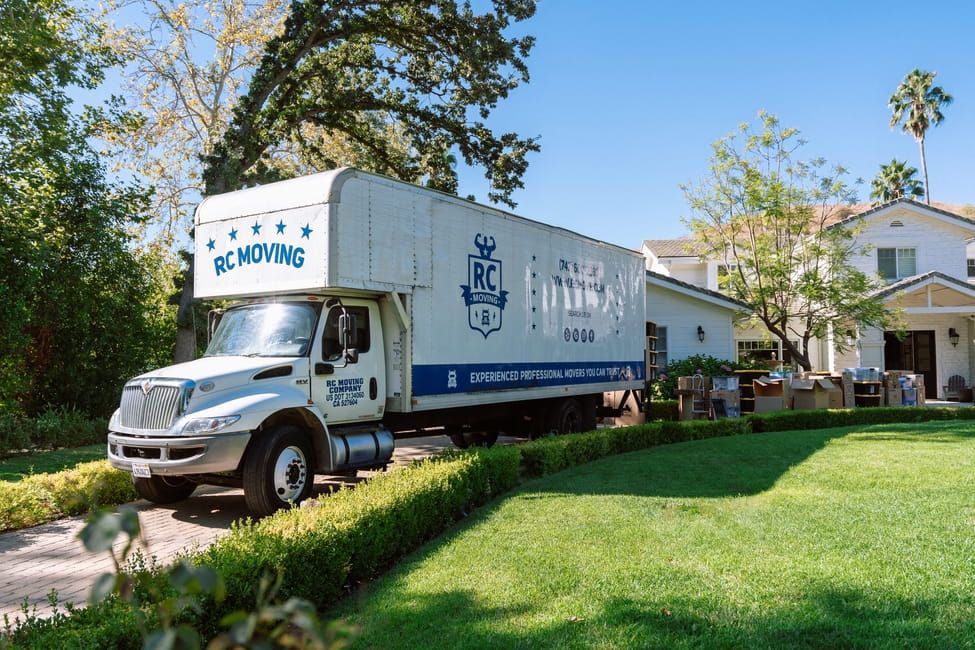
Rules depend on the city, and many places in our service area are separate cities with their own process:
Each of our city pages lists local parking and permit tips. If the building has a loading zone or a dock, confirm the truck fits and how long you can use it.
Buildings put a limit on time, so everything you finish before the crew arrives pays off:

If you run out of time, every truck carries small, medium and large boxes, and the crew can finish packing on the spot. If you know you’ll need a lot of help, ask about our packing and unpacking service.
The first and last days of the month, and Fridays through Sundays, are when elevators, docks and movers are most in demand. We recommend booking about two weeks ahead, and earlier for those dates. If your building allows weekday moves, Monday through Thursday is also when we offer a discounted weekday rate.
For a small apartment or a short-notice move, see small and last-minute moves. Moving an office in a commercial building? Our office and business moves page covers COI, dock and elevator planning for businesses.
Can RC Moving provide a Certificate of Insurance for my building?
Yes. We request it from our insurance agent, which can take up to 24 hours. Send us your building’s exact requirements early.
Who arranges parking for the moving truck?
You do, at both addresses. Our city pages list local permit and sign rules to help you plan.
Do you charge extra for elevators or a long walk from the dock?
No separate fees. Elevators, stairs and long carries take more time, so we ask about access up front and build it into your free written estimate.
Will you protect the building’s hallways and elevator?
Yes. Our crews protect elevators and hallways and wrap furniture in pads and stretch wrap.
How far ahead should I book an apartment move?
About two weeks, and earlier for the first or last day of the month and weekends.
Tell us both addresses, your date, what’s moving and the building rules at each end, and we’ll send a free written estimate with no surprise fees. Request a free quote or call (747) 600-2030, 8 AM to 8 PM every day.
“How many hours will my move take?” is the first question almost everyone asks us. It is a fair question,...

In Los Angeles, the hard part of moving day is often not the sofa. It is the street. A 26-foot...
